AI built most of my side projects. But, the parts that mattered were still mine.
This fall, AI helped me ship a stack of kids’ activity books to Amazon KDP, build a kids’ learning website, and sketch out a health tracking app. If you count hours, AI did more of the work than I did. But while AI made these projects possible, reshaping every detail until it matched what I actually had in mind still took a lot of my time.
As a product manager, I designed each service and handed the plan to AI, and AI made it real. I studied human-computer interection but didn’t know the first thing about programming or coding. Building anything used to mean working with a team of engineers. Now AI plays the role of engineers.
It started with a YouTube video I stumbled on about designing coloring books. My daughter is six years old, and I wanted to make my own materials to help her learn English. So, I launched a series of kids’ activity books built around coloring and word search. Five books later, I’ve made exactly one sale, and I’m happy with that because my daughter is learning English from those books right now.
Then I started building kids’ learning tools, also for her. I knew I had to use AI as much as I could so I wouldn’t fall behind at work. When it came time to pick something to build, I chose kids. So far I’ve made 15 learning tools. I’ve always run user tests in my work, and this time my test user was my daughter. I had her try each tool herself and fixed whatever wasn’t working for her. They haven’t launched yet, but soon I’ll open them up for anyone to use for free.
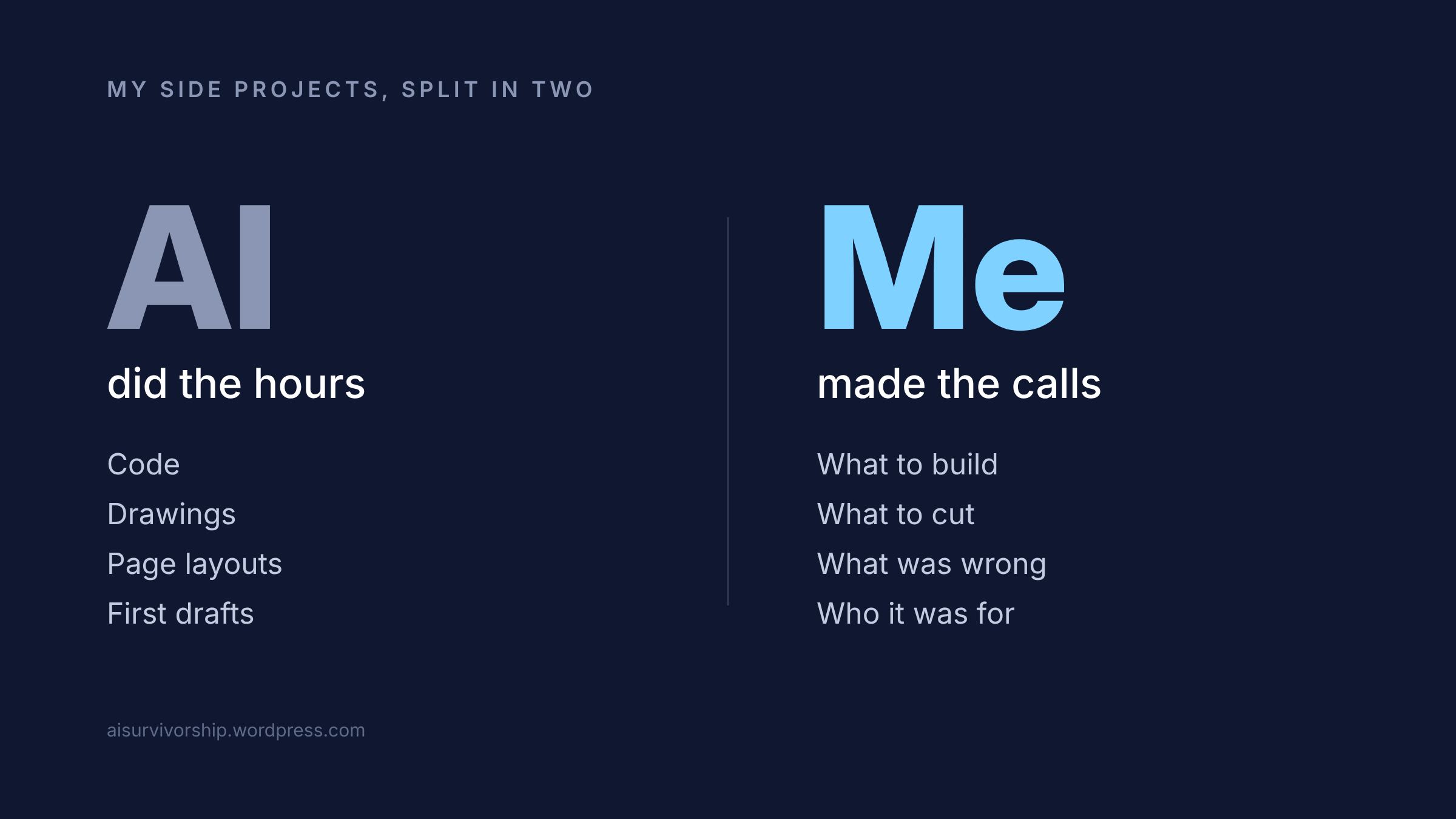
But when I look at what actually moved each project forward, the picture flips. The decisions that made or broke these projects never came from the AI. They came from me, from my daughter, and from the handful of people I asked for honest feedback.
The paradox: when AI removes the middleman, people get more valuable
Disintermediation is an economics term for cutting out the middle layer. Online booking cut out travel agents. Trading apps cut out the broker on the phone.
In an interview with Arianna Huffington, Anthropic co-founder and president Daniela Amodei called AI romantic partners “a terrible use of AI.” She described them as “another step further down the road of disintermediation of humans being further from one another.” (TNW) Social media already stepped between people. AI could go further and quietly replace the person you would have asked, trusted, or argued with.
The column’s twist is the part that stuck with me. The more AI takes over the tasks between people, the more expensive the things only people can do become. Judgment. Trust. Getting people who disagree to land on one decision.
Recent news tells the same story
Look at recent headlines and the same pattern keeps showing up. AI takes over the work, and people end up mattering more, not less.
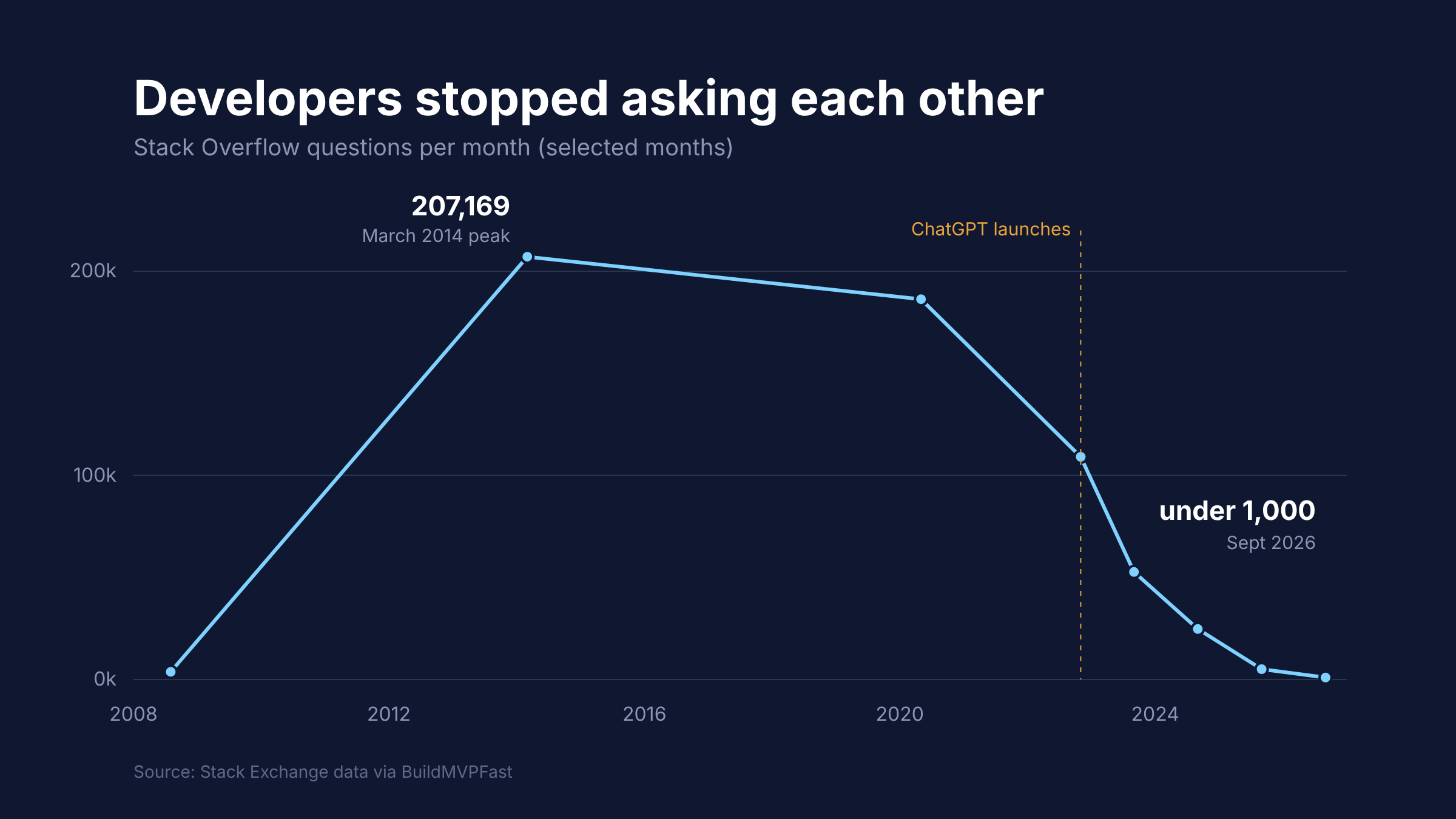
- Developers stopped asking each other. Stack Overflow peaked at 207,169 questions in March 2014. In September 2026, it got fewer than 1,000. (BuildMVPFast)
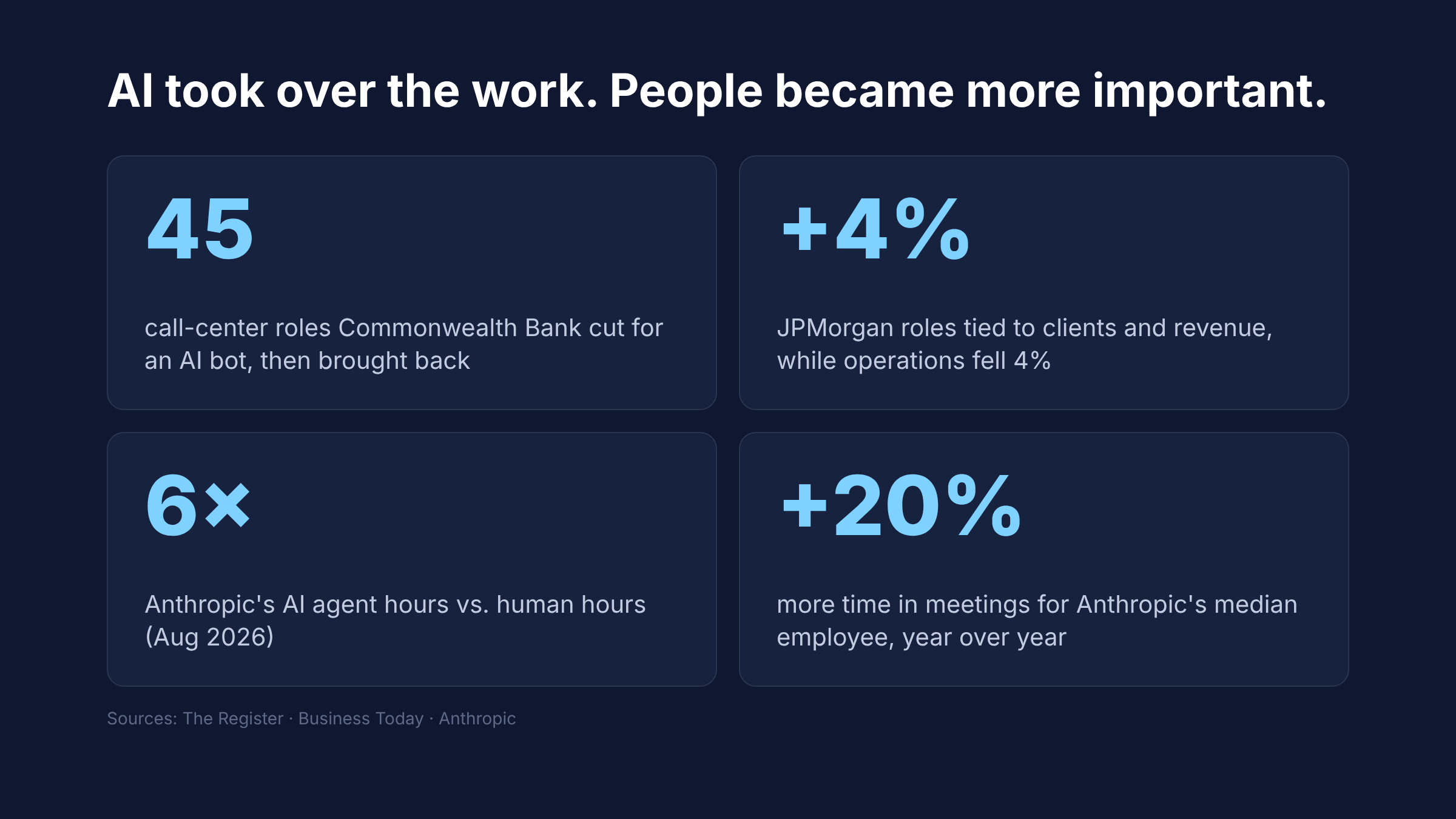
- A bank walked back its AI cuts. Australia’s Commonwealth Bank replaced 45 customer service roles with an AI chatbot in 2025, then reversed course and admitted “the Bank was wrong.” The union said call volumes had actually gone up. (The Register)
- JPMorgan moved people, not just cut them. Its operations staff fell 4%, while roles tied to client engagement and revenue rose 4%. (Business Today)
- Anthropic itself meets more. By August 2026, its employees’ AI agents logged six times their human hours. Yet the median employee’s meeting time rose 20% in a year, and employees called face-to-face coordination “indispensable.” (Anthropic)
- Office workers agree. In a Korean survey of 1,090 workers by KRIVET, 33.4% said AI helped most with research and information gathering. Only 1.4% said ideation and planning. (Newswire, Korean)
That last number hit close to home. Research, information gathering, ideation, and planning: that’s my entire job description.
My ledger: what AI did vs. what only I could do
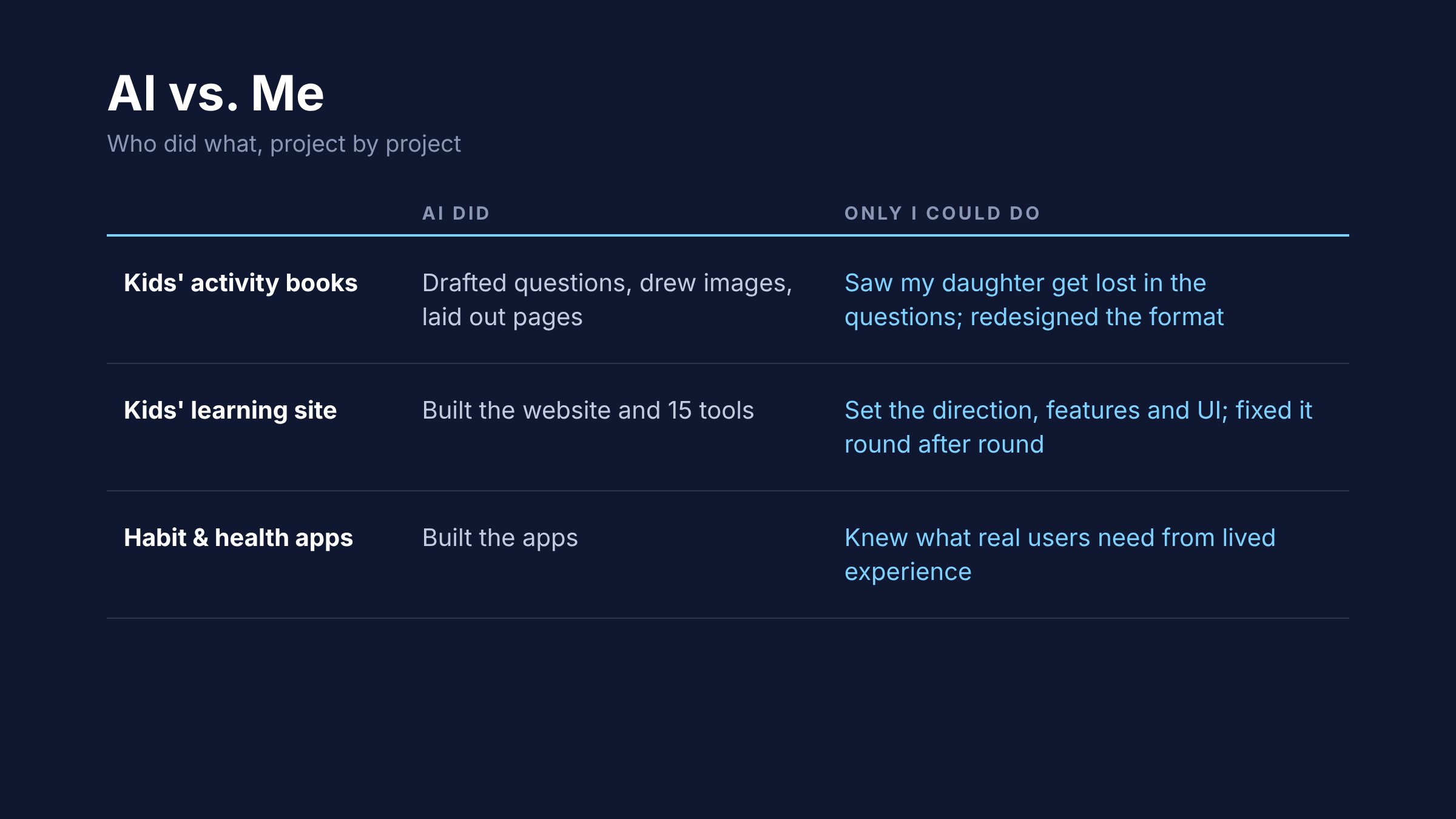
Every project followed the same pattern. AI could build almost anything I described. Knowing what to describe, and spotting when it was wrong, still took a human.
| Project | What AI did | What only a human could do |
|---|---|---|
| Kids’ activity books | Drew images, laid out pages, wrote cover copy | My 6-year-old couldn’t understand the worksheet questions because they weren’t clear enough. That one afternoon changed the whole format. I’d started with full-page coloring because that’s what everyone recommended, but kids only colored bits and pieces. A full coloring book had little value as a kids’ book, so I redesigned it around pages where kids color and write one word at a time. |
| Kids’ learning site (15 tools) | Built the website | Every detail needed a human: the service direction, each feature, the UI. AI made a first draft, then I wrote up every fix myself. It rarely got it right the first time, so each tool went through several rounds. |
| Habit tracker & health tracking app | Built the apps | I built two apps. The habit tracker was something I needed myself, so I wanted it to reflect exactly what I had in mind, an app made just for me. In the end, all the planning was mine. For the health app, AI didn’t know what real patients actually need. I planned the features and direction from my own experience, then refined every detail. Again, AI rarely got my intent on the first try, so it took many rounds to revisions. Every project followed the same pattern. AI could build almost anything I described. Knowing what to describe, and spotting when it was wrong, still took a human. |
What this means if you work in an office
I work an office job, and much of my week is exactly that 33.4%: gathering research, summarizing it, turning it into slides. AI already does that part faster than I can. What it couldn’t do in any of my side projects was decide what was worth building. That’s the 1.4%, and that’s where I want to grow.
The column points to a shift already happening in Korean offices. When junior staff bring in AI-written reports, senior colleagues now ask them to explain why they reached that conclusion. The report is cheap. The reasoning, and the ability to defend it in a room, is not.
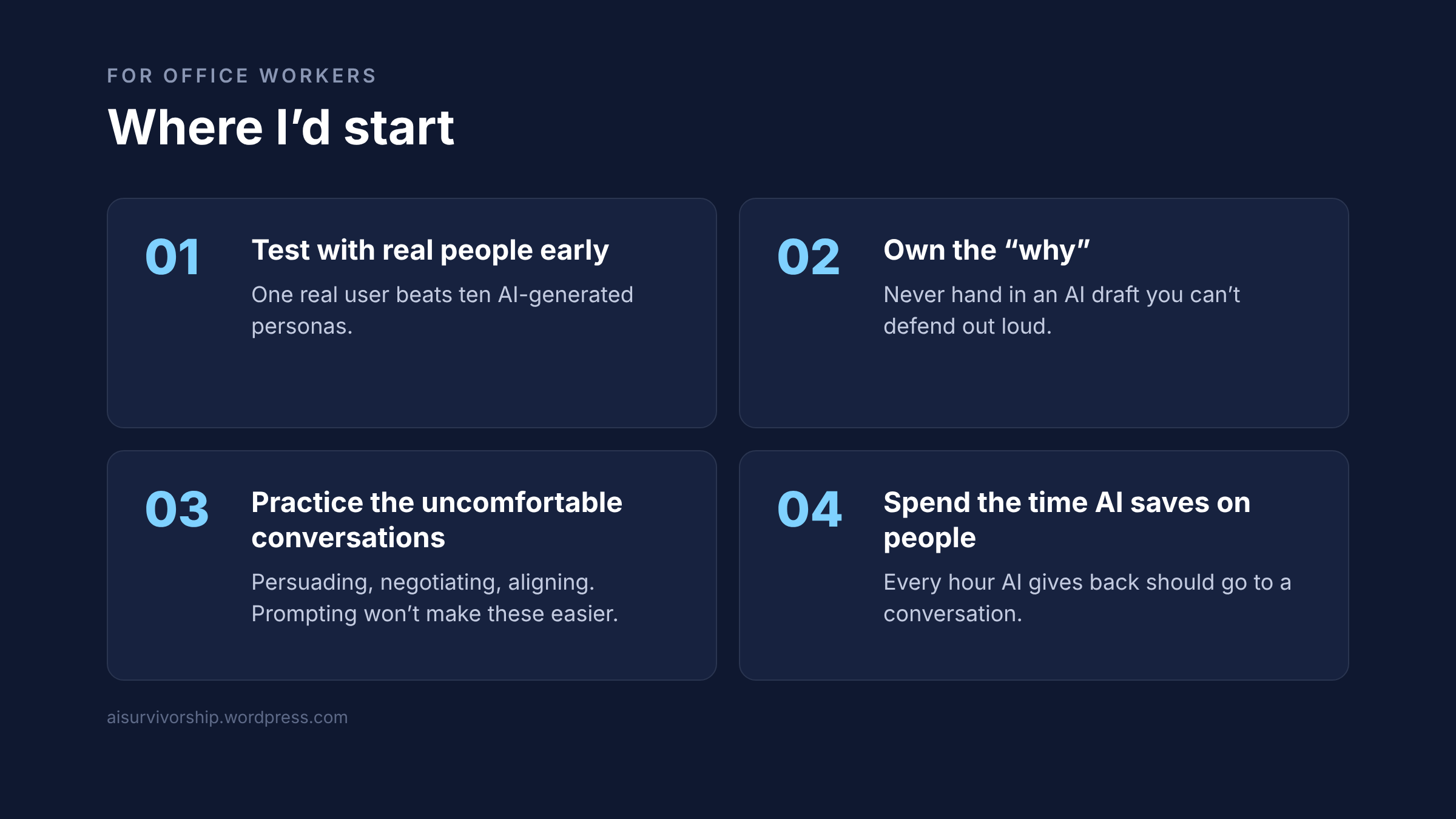
If you work in an office too, here’s where I’d start:
- Test with real people early. One real user beats ten AI-generated personas. My daughter’s confused face did more for my workbooks than any prompt.
- Own the “why.” Never hand in an AI draft you can’t defend out loud.
- Practice the uncomfortable conversations. Persuading, negotiating, and aligning people who disagree. Prompting won’t make these any easier.
- Spend the time AI saves on people. Every hour AI gives back should go to a conversation, not just more output.
The part AI can’t take
The column ends on a simple idea I keep coming back to: the more AI handles for us, the more valuable the things only people can do become.
In my projects, that was never the code or the drawings. It was noticing that my daughter couldn’t understand a question, and knowing what to build because I had lived the problem myself.
AI can write the code, draw the pictures, and lay out the pages. What it can’t do is sit next to a six-year-old and see the exact moment she gets lost. It can’t know what someone managing a health condition needs on a hard day. Every good decision in my projects came from moments like those.
I used to think surviving the AI era meant learning to use AI better than everyone else. That still matters. But after months of building with it, I think the bigger question is different: what do you notice, know, or care about that no model can? That’s the part worth investing in.
AI will keep getting faster. The people who stay valuable won’t be the ones racing that speed. They’ll be the ones who know where to point it. That’s the kind of person I want to be, and I’ll never stop asking myself how to get there.
What’s the part of your job AI can’t touch? Tell me in the comments.